
'Whenever markets rally, the IPO pricing gets aligned to the prevailing market conditions.'

India Inc's cash pile was up 13.8 per cent last fiscal year, thanks to a combination of higher profits in sectors such as IT and fund raising by top companies such a Reliance Industries, Bharti Airtel and Tata Motors, among others.

Listed companies have seen equity deals worth Rs 23,500 crore in March.

Banking and financial stocks got more than their fair share of foreign portfolio investor (FPI) flows in February. Overseas investors pumped in $3.56 billion into domestic equities last month. Of this $1.96 billion went into financial stocks, data analysed by Edelweiss shows. "The sector now has 34.8 per cent of FPI assets, up from 33.8 per cent in January.

The dozen firms to have listed following their IPOs have seen an average listing day gain of 49 per cent. IPO applicants have made money on all the deals, barring two, which saw modest declines on listing day.

Tata group companies have outperformed the broader market over the past four years, under the chairmanship of N Chandrasekaran. However, the group's fortunes rely heavily on the performance of Tata Consultancy Services (TCS) now, as compared to the past. The combined market capitalisation of the group's listed companies has nearly doubled in the last four years, against a 77 per cent rally in the benchmark Sensex during the period. The overall market value of 16 key group firms - excluding listed subsidiaries of such entities - stood at Rs 16.8 trillion as of Friday. This was close to 2x the Rs 8.45 trillion as of February 21, 2017 - the day Chandrasekaran took charge as chairman of Tata Sons.

India Inc's quarterly net profit reached a record high of Rs 1.64 trillion in the third quarter ended December 31, 2020, mainly due to gains from higher commodity prices and a big swing in banks' earnings. The combined net profit of 3,323 listed companies that have declared results so far was up 68.6 per cent year-on-year (YoY). In comparison, earnings were up six times (534 per cent) in the second quarter and 6.5 per cent in the corresponding period last year.
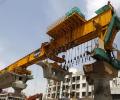
The combined net sales of 42 listed construction and capital goods companies that have declared their third-quarter results so far were down 2.3 per cent year-on-year in Q3FY21 while core operating profit was up just 4.9 per cent YoY during the quarter.

Market cap of government companies has remained unchanged in the past 8 years.

This correction has given a good entry for long-term investors. One should buy quality stocks and those with growth potential.

BSE-listed companies' market capitalisation reached Rs 197.7 trillion on January 21, against India's nominal GDP of Rs 190 trillion during 12 months ended December 2020.

Over the three-month period, Airtel's stock price has rallied from Rs 432 to Rs 540, while Vodafone Idea has risen from Rs 9.2 to Rs 11.8 per share.

This is first time in 25 years that a benchmark equity index in India is trading at a P/E multiple of 40x or higher.

Of the 854 stocks that quoted less than Rs 20 on March 23, 2020 - when the Sensex hit more than a three-year low - 482 have doubled.

RailTel Corporation of India, Indigo Paints, Home First Finance Company, Indian Railway Finance Corporation, and Suryoday Small Finance Bank are among the companies looking to tap the market.

Tata Sons stake in the group's listed companies is now worth Rs 9.28 trillion, up 34.4 per cent on a year-on-year (YoY) basis. In comparison, the Government of India's stake in listed central public sector undertakings (PSUs) is currently valued at Rs 9.24 trillion

More people seemed to be returning to their workplaces towards the end of the year, even as railway and electricity numbers disappointed. Most other indicators held on to their gains.

The growth was led by family-owned companies and business groups with presence in pharmaceuticals, information technology services, and consumer products.
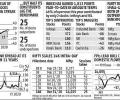
It took Nifty 25 sessions to cross 14,000 from 13,000-levels.

Rs 1,000 now buys $13.5 against $14 a year ago.
 © 2026 Rediff.com - Advertise with us - Disclaimer - Privacy Policy - Sitemap - Feedback - About us - Terms of use - Grievances